
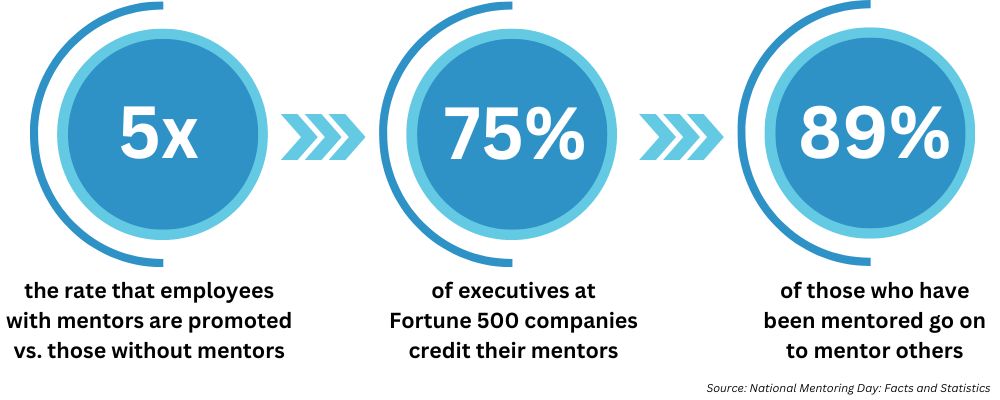
Mentorship is a powerful tool for career development that can help you achieve your personal and professional goals, access helpful resources and advice, gain “insider” knowledge and insights from someone with vast experience, and build your professional support network. Mentorship is the gift that keeps on giving, and you’ll find that professionals who are years into their careers continue to lean on their mentors for support. Even after you land that first job or feel like you’ve found your way, mentorship is something that you will continue to invest time and energy into throughout your career. I always say that if you’re doing it alone, you’re doing it wrong. Career development is a lifelong journey that relies on the help of others to set you up for success.
So how can you go about building mentorship into your career?
Define Your Needs and Goals:
Start by defining your needs and goals! Reflect on your strengths, weaknesses, and career aspirations. What specific skills or knowledge do you want to develop? What challenges do you anticipate? From there, you’ll want to outline specific, measurable, achievable, relevant, and time-bound (SMART) goals for your mentorship journey. These will guide you in finding the right mentor and measuring your progress.
Find the Right Mentor:
Once you’ve started to define what exactly you’re looking for from a mentor, you’ll want to find the right mentor for you. Sometimes the best way to start is to look within. Start by exploring potential mentors within BU. Consider professors, advisors, supervisors, or leaders whose expertise aligns with your goals. From there, leverage your existing network by reaching out to former colleagues, industry connections, or alumni from professional associations. Explore online mentorship platforms or professional groups where you can connect with established professionals in your field.
BU Connects is a platform exclusively for Boston University alumni, students, faculty, and staff that brings Terriers together for personal and professional networking. Using the built-in functionality to help facilitate networking and mentoring, you can easily connect with alumni and others for informational interviews and more. Thousands of alumni, faculty, and staff have raised their hands on BU Connects to express that they are willing to mentor BU students and alums! You can also join different groups and networks within BU Connects based on your affinities and fields of interest. Similarly, you can use LinkedIn to build your professional brand, join professional groups, expand your network, and stay connected to those you meet in internships and other experiences. The LinkedIn Alumni Tool can help you find and connect with BU alumni.
Another useful tip is to go to your Handshake resources and explore a tool called “What Can I Do With This Major?” Search for your major and find curated professional associations based on your industry. Get involved in your professional associations by attending events, volunteering, or staying connected. Some may even have mentorship programs built into their membership.
Cultivate the Relationship:
Mentorship is a two-way street, and the mentee is often the one in the driver’s seat when it comes to initiating outreach and setting goals and priorities. Be sure to establish clear expectations for the mentorship. Discuss communication frequency, meeting format, and goals for the relationship. Finally, be proactive and respectful by taking the initiative in scheduling meetings and coming prepared with specific questions or topics for discussion. Be mindful of your mentor’s time.
Focus on building a rapport and genuine connection with potential mentors. Take time to research their background and find common interests. Make sure that you’re not only coming to your mentor when you need something, as this could come off as transactional. The key to successful mentorship is building reciprocal, authentic relationships in which both the mentor and the mentee are invested in getting to know and supporting one another. While you may not feel that you have as much to offer your mentor, you can still demonstrate your commitment to the relationship by getting to know them as a person and offering your support and perspective as a student or new professional.
Make the Most of It:
Once you’ve found a good fit, be sure to engage actively in discussions with your mentor. Ask thoughtful questions, seek feedback, and share your progress or challenges along the way. If your mentor gives you specific guidance or advice, make sure that you are putting that advice into action and demonstrating your commitment to learning and self-improvement. This is a great way to show that you listened to and took their advice to heart.
One of the most important lessons when it comes to mentorship and networking is the art of gratitude and showing your appreciation. Express your gratitude to your mentor for their time and support whenever possible. They are giving back their time, knowledge, and experience to help support you in your personal and professional journey. Make sure that they know the impact that they’ve had and the difference they have made for you.
Bonus Tip: Pay it Forward: Consider becoming a mentor yourself someday. Sharing your knowledge and experience can be just as rewarding as receiving mentorship.
Ultimately, finding the right mentor takes time, investment, and intentionality. The best place to start is by first looking at your existing networks at BU and beyond. Often the best mentors are people who have been there for you all along.
*Image courtesy of NACE, source: National Mentoring Day, Facts and Statistics
 BU + Beyond